Guides
Electrical contractor packages: bundles that make sense
Electrical contractor packages sell best as named bundles, each tied to one trigger, one crew, and one clear price basis a customer can actually check.
What to take away
- An electrical contractor package is a named bundle with a defined trigger, scope, crew, and price basis. "We do everything" is not a package.
- Five bundles cover most residential and light commercial demand: panel and service upgrade, EV charger installation, whole-home surge and grounding, lighting retrofit, and a maintenance agreement.
- Each bundle needs one price basis you can defendflat rate, per-circuit, per-foot, or time and material with a stated cap.
- Typical 2026 rangesa 200-amp service upgrade at $1,800 to $4,000, an EV charger install at $800 to $2,000, whole-home surge protection at $300 to $800 installed, and a maintenance agreement at $600 to $2,500 per site each year.
- General contractors buy scheduling reliability, not the lowest number. Ask for the next project's drawings before you quote this one.
- Permits come from the local authority having jurisdiction, usually a city or county building department. Your state licensing board governs who may file them.
This article covers business packaging decisions only. For work on or near energized equipment, stop and consult a licensed electrician and the authority having jurisdiction. CSA Z462 and OSHA set the safety requirements that apply to your site.
Five bundles worth building
Each bundle below carries one trigger, one scope, one crew, and one price basis. Price ranges assume a single-family home or a small commercial tenant space in a mid-cost US market as of 2026. Adjust for local wages and permit fees.
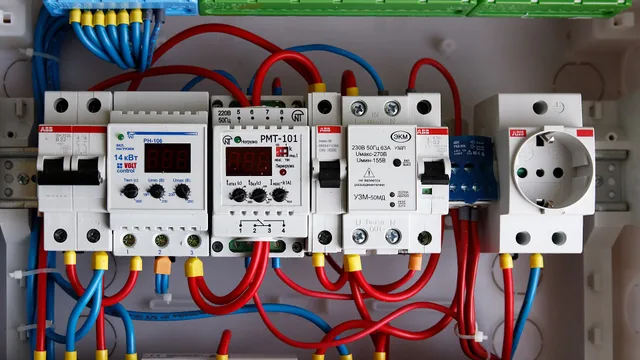
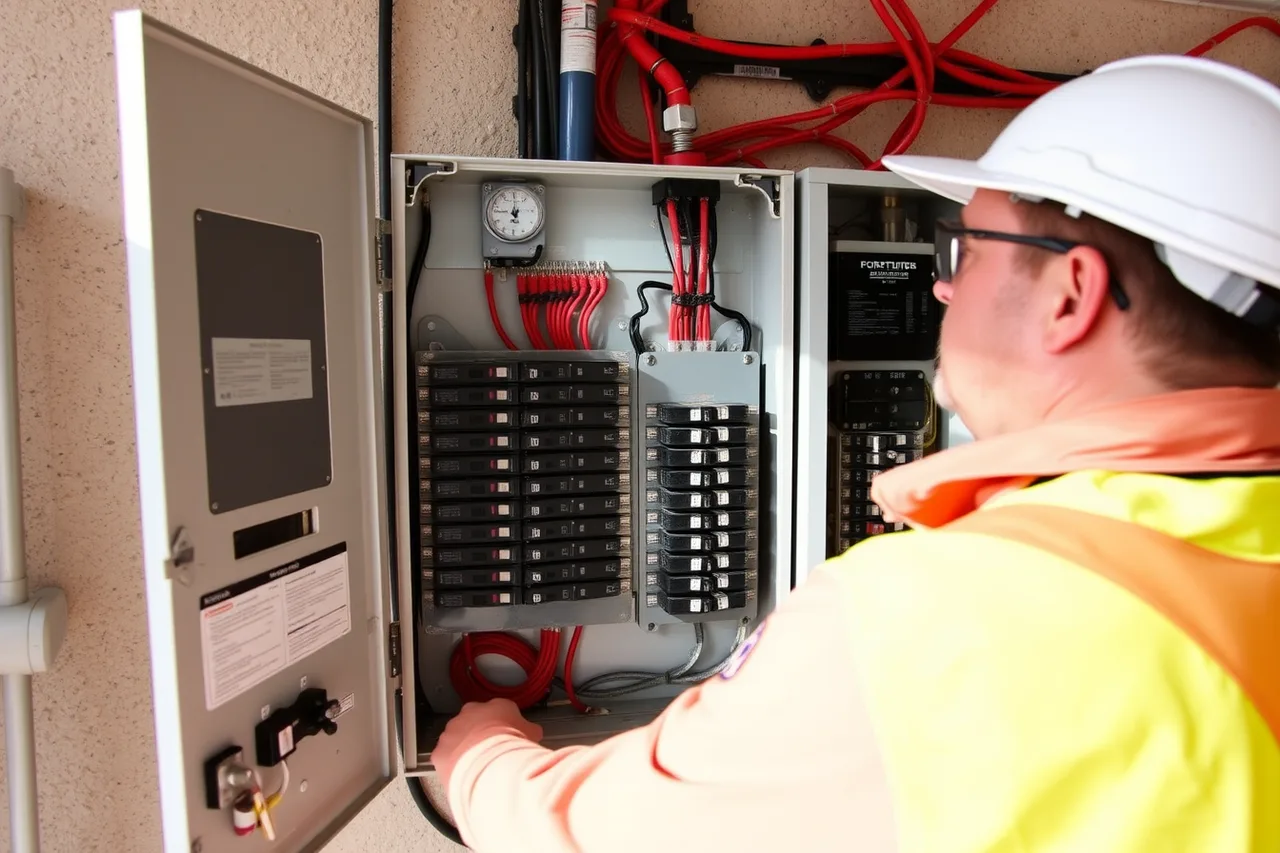
Panel and service upgrade. The trigger is usually an EV, a heat pump, or a failed inspection. Scope runs from load calculation through permit, meter pull coordination, new panel, and inspection sign-off. Common hardware includes Square D QO and Homeline panels from Schneider Electric, Eaton's BR and CH lines, and Siemens.
Price flat rate by amperage. A 200-amp residential upgrade typically runs $1,800 to $4,000. A mast or meter relocation adds $500 to $1,500. The utility disconnect fee runs $0 to $500, so state it as a separate line because it varies.
EV charger installation. The trigger is a vehicle delivery date, which gives you a real deadline. Scope is circuit run, breaker, permit, and commissioning. Hardware customers ask for by name: the Tesla Wall Connector at $420, the Emporia Level 2 around $400, the ChargePoint Home Flex around $549, and the Wallbox Pulsar Plus around $649.
Price per-foot for the run plus a flat commissioning charge, since a detached garage can triple the cable. Short runs typically install for $800 to $2,000, with conduit billed at $12 to $25 per foot. Qmerit routes residential charger work to licensed installers, so its network sets the price you compete against.
Whole-home surge and grounding. The trigger is a nearby strike, an insurance claim, or a panel replacement already open. Scope is ground rod, bonding, and a listed surge device. Units to quote include the Square D HEPD80, the Eaton Ultra, the Leviton 50240-MSA, and the Siemens FirstSurge.
Price flat rate per service. Devices sell for $100 to $400, and installed protection with a new breaker typically runs $300 to $800. Ground rod and bonding work adds $200 to $600. This bundle fits neatly onto the panel job, which spares the customer a second mobilization charge.
Lighting retrofit. The trigger is a lease renewal or an energy audit. Scope is fixture count, controls, and disposal. Fixtures come from RAB, Lithonia Lighting, and Cree Lighting, with controls from Lutron and Leviton. Price per fixture with a controls adder.
Installed fixtures typically cost $60 to $200 each. Controls add $100 to $300 per space, and disposal adds a small charge per fixture. Commercial work here often carries holdback, so read the contract before you commit.
Maintenance agreement. The trigger is a commercial tenant or a landlord with several properties. Scope is annual torque checks, thermal scanning, and emergency response priority. NFPA 70B became a standard in 2023, and it sets the maintenance intervals customers now ask about.
Price as an annual fee with a stated response window. Agreements typically run $600 to $2,500 per site each year, or $200 to $500 per panel. Thermal scans use a handheld camera such as a FLIR unit, and torque checks need a calibrated wrench and a logged reading.
Pricing each bundle so it survives a slow month
Set the price from burden, not from the competitor's flyer. Take the journeyperson wage, add payroll burden, add vehicle and insurance cost per hour, then divide by billable hours you actually achieve. Licensed journeyperson wages typically run $35 to $50 an hour in most US markets as of 2026, before burden.
If your crew bills 1,100 hours a year against 2,080 paid, the multiplier is close to two. A $40 hourly wage then costs about $80 per billable hour before profit. Run that math against your own last twelve months of payroll.
Check contribution per constrained hour, not margin percentage. A panel upgrade that consumes your only licensed lead for three days may earn less than four EV chargers she can run in the same window.
Publish the price basis in the quote. Customers accept a per-foot charger rate when the run length is drawn on the estimate. They argue when it appears on the invoice.
Permits, inspections, and the referral channel
Every bundle above needs a permit in most jurisdictions, and the filing step is where packages quietly lose money. Build the permit fee and the inspection wait into the schedule, not into an afterthought.
Residential permit fees typically run $50 to $300, and inspection waits run one to ten business days depending on the AHJ. Name the authority having jurisdiction on every permit and confirm the current fee and wait before you promise a date.
General contractors are the highest-value channel for these bundles because they hand you repeat work without advertising spend. They choose on schedule reliability and clean inspection records. Bring the last three inspection sign-offs to the first meeting. Trade bodies such as NECA and IEC run contractor directories that general contractors search by trade and region.
Your advertising has to match what you can prove. The FTC's guide to advertising claims requires that any claim about speed, licensing, or results be truthful and supported.
Keep the paper trail for every bundle. The IRS recordkeeping guidance accepts any system that clearly shows income and expenses, provided the documents behind purchases, payroll, and assets are kept.
OSHA's electrical contractors page lists the hazards this trade carries, from shock and electrocution to falls and vehicle incidents, and links the standards that apply. Package scope should never promise work your crew is not trained and equipped to do.
What a package looks like on paper
| Bundle | Customer trigger | Price basis | Crew needed |
|---|---|---|---|
| Panel and service upgrade | EV, heat pump, failed inspection | Flat rate by amperage, typically $1,800 to $4,000 at 200 amps | Licensed lead plus helper |
| EV charger installation | Vehicle delivery date | Per-foot run at $12 to $25, plus flat commissioning | One licensed electrician |
| Whole-home surge and grounding | Nearby strike or open panel | Flat rate per service, typically $300 to $800 installed | Same crew as panel job |
| Lighting retrofit | Lease renewal or energy audit | Per-fixture at $60 to $200, controls adder $100 to $300 | Two-person crew |
| Maintenance agreement | Commercial tenant or landlord | Annual fee, typically $600 to $2,500 per site | Scheduled rotation |
Name each bundle after the outcome and the trigger, not the hardware. "EV charger installation, 40 to 60 amp circuit" tells a customer what they get. "Level 2 package" does not. Keep one name across the website, the estimate, and the invoice so the office and the field use the same words.
A one-page quote for the EV charger bundle looks like this. The run is 45 feet from a detached garage, and the customer supplies the charger.
| Line | Item | Price basis | Amount |
|---|---|---|---|
| 1 | Load calculation and permit filing | Flat | $150 to $300 |
| 2 | 60 amp circuit, 45 foot run in conduit | Per foot, 45 ft at $12 to $25 | $540 to $1,125 |
| 3 | Charger supplied by customer | Pass-through | $0 |
| 4 | Commissioning and test | Flat | $150 to $250 |
| Total | $840 to $1,675 |
Exclusions go on the same page: drywall repair, trenching, utility service upgrades, and the permit fee where the AHJ bills the homeowner directly. State the price hold, such as 30 days, and the response window if the customer adds work.
Present it in one sentence: "For $840 to $1,675 we run the 45 foot circuit, file the permit, mount your charger, and test it. Trenching and drywall repair are yours." Read the exclusions out loud before the customer asks.
A full electrical contractor services lineup is the sum of bundles like these, not a list of everything the crew has ever done.
Common questions
How many packages should a small contractor sell?
Three to five. More than that and the office cannot quote consistently, and customers cannot tell the offers apart. Start with the panel upgrade and the EV charger, since those two drive most inbound calls.
Should packages be flat rate or time and material?
Flat rate works when the scope is repeatable, like a charger on a known run length. Time and material suits diagnostics and older buildings where you cannot see the wiring. State the basis in writing either way.
Do I need a separate permit for each package?
Usually yes. A capacity change or a new circuit each needs its own filing, so a panel upgrade and an EV charger are two permits, not one.
What kills a package fastest?
Pricing it from a competitor's advertisement instead of your own burden, then discovering the constrained hour was worth more elsewhere. Review contribution per constrained hour every quarter.